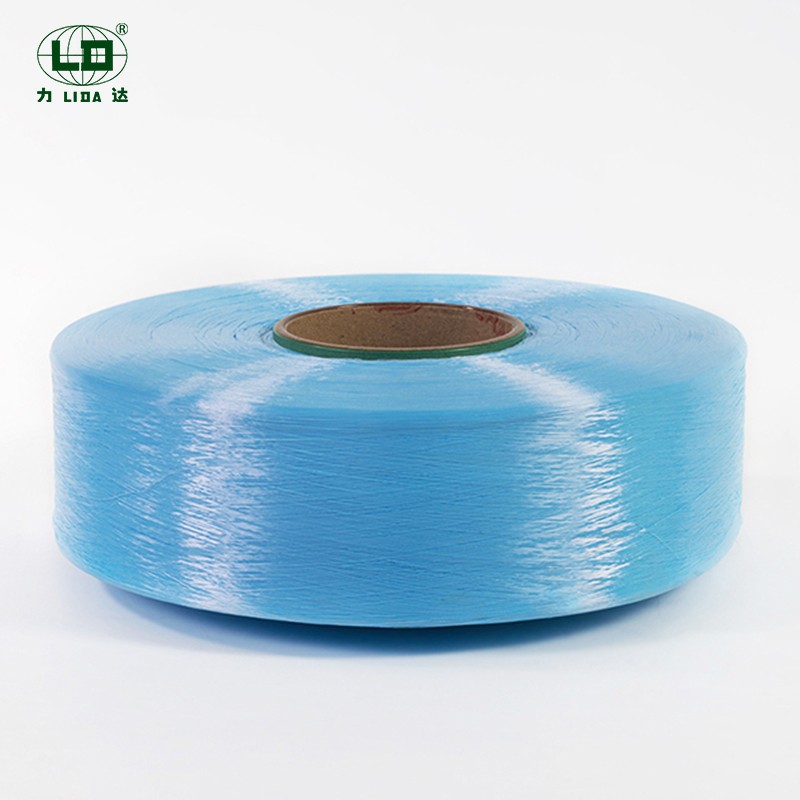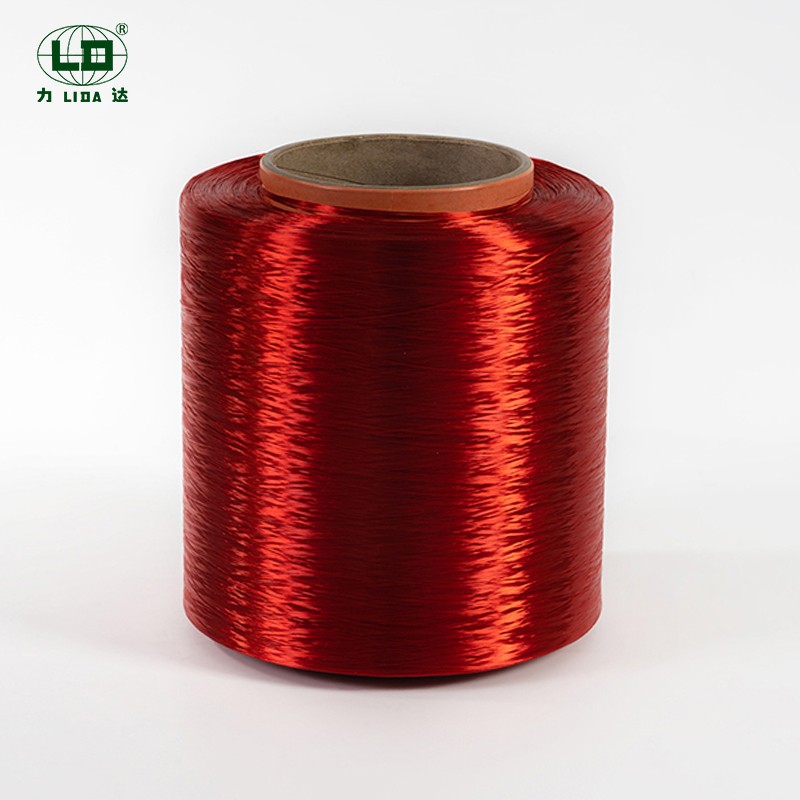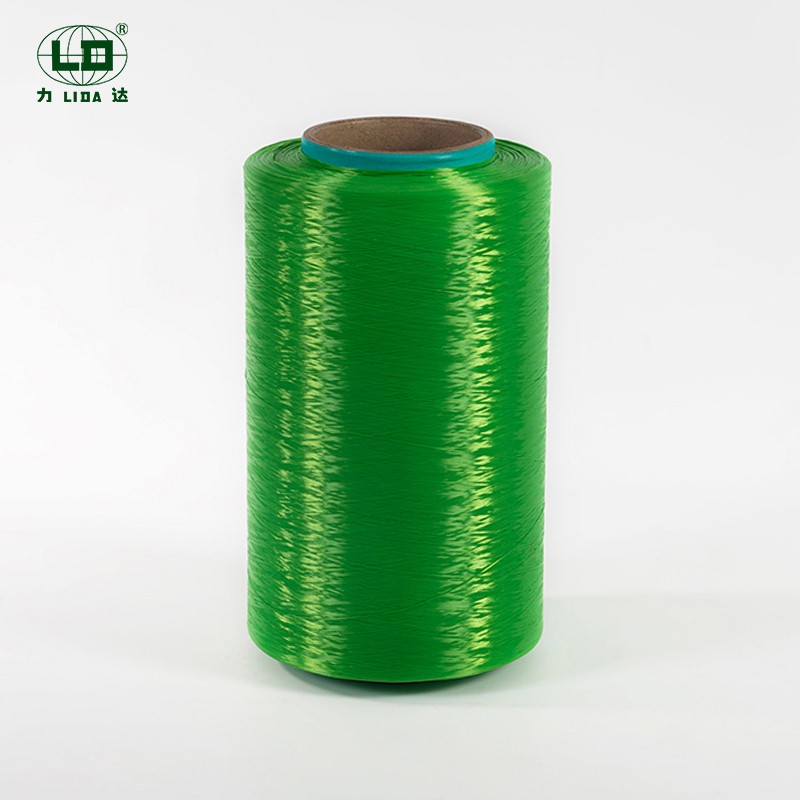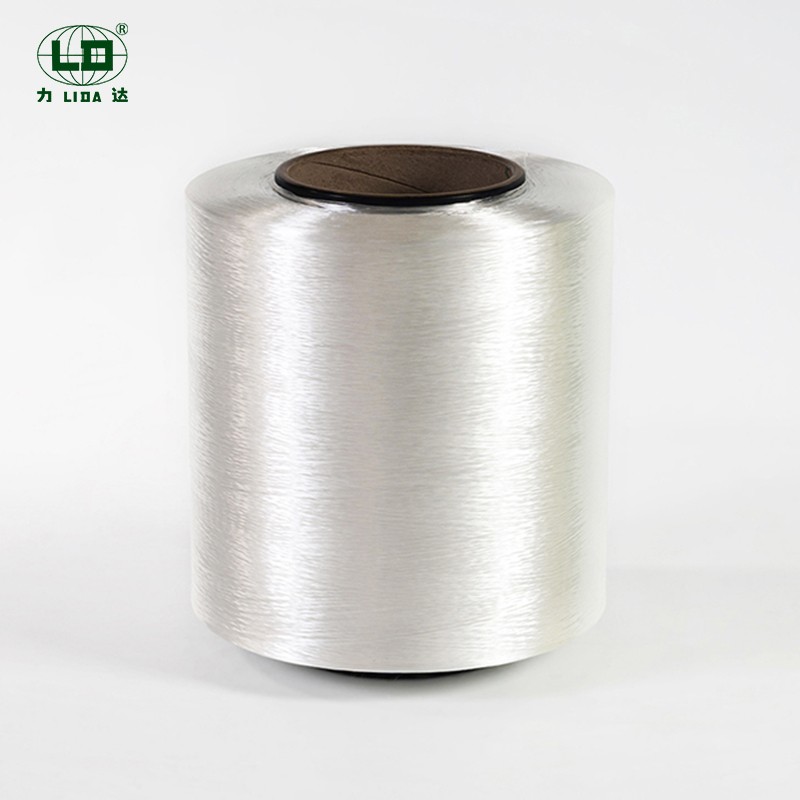

The main molecular chain of nylon 6 contains amide bonds, which are sensitive to ultraviolet radiation. Under outdoor sunlight, UV photons excite amide bond cleavage and trigger chain free-radical reactions, leading to polymer degradation. Macroscopically, fibers show yellowing, reduced breaking strength, decreased elongation at break and gradual embrittlement failure.
用於工業生產抗紫外線長絲尼龍6, light stabilizers are introduced during polymerization or spinning. The main categories include UV absorbers, hindered amine light stabilizers (HALS) and inorganic UV shielding powders. As foreign components added into PA6 matrix, light stabilizers alter intermolecular forces of the polymer. Higher stabilizer loading improves UV weathering resistance, yet excessive dosage breaks the continuity of polymer network and risks deterioration of fiber mechanical properties. This is the fundamental reason for the performance trade-off.
Single-type light stabilizers hardly achieve long-term UV resistance, so compound systems are widely adopted. UV absorbers absorb UV energy while HALS capture free radicals generated during photodegradation. The two components synergistically retard aging. However, heat resistance varies among additives. Nylon 6 spinning temperature normally ranges from 260–280℃. Additives with insufficient thermal stability decompose or volatilize during melting, forming microbubbles inside the melt. These bubbles become stress concentration points on filaments, raising spinning breakage rate and increasing dispersion of fiber mechanical data.
Inorganic powders such as titanium dioxide physically block ultraviolet rays. Well-dispersed powder delivers stable UV resistance. In contrast, powder agglomerates form structural defects inside fibers. Stress cracking tends to occur at these agglomerates under external force, directly reducing breaking tenacity and toughness. Compared with organic light stabilizers, inorganic fillers exert more obvious adverse effects on fiber elongation.
Compound formula design prioritizes high-temperature-resistant additives compatible with nylon 6 melt spinning conditions. The synergy between HALS and UV absorbers achieves target weathering performance at low total loading, minimizing disturbance to PA6 molecular structure. Additives prone to volatilization or decomposition at spinning temperature are excluded to avoid internal defects in filaments.
Compared with direct powder feeding, UV masterbatch blending greatly improves dispersion uniformity of additives in nylon melt, preventing local weak points caused by excessive additive concentration in partial fiber zones. Masterbatch carriers adopt materials with good compatibility with PA6 matrix to reduce interface defects. Masterbatch dosage can be adjusted according to filament denier and yarn type (FDY/DTY).
After formula confirmation, spinning parameters affect final mechanical performance and uniformity of UV resistance. Melt temperature, screw back pressure and quenching air conditions directly influence polymer orientation and internal residual stress. Proper process control reduces melt inhomogeneity, bubbles and impurities to ensure uniform internal fiber structure. For fine denier long filaments, filter pack precision is upgraded to trap undispersed agglomerates and reduce filament breakage.
有兩條技術路線可供選擇抗紫外線長絲尼龍6: bulk modification and post-finishing coating. Bulk modification incorporates stabilizers into melt before spinning. Additives are embedded within fiber bulk, delivering good washing and abrasion resistance with long-lasting UV performance. However, formula balancing is required to maintain mechanical properties. Post-finishing coating applies UV-resistant coating onto finished yarn surface. It has minimal impact on raw yarn mechanics, yet the surface functional layer gradually wears off after long-term friction and washing, leading to poor UV durability. Bulk modification is the mainstream technical solution for long-term outdoor applications.
Testing only breaking tenacity and UPF of fresh yarn cannot fully evaluate the material. A complete evaluation system covers mechanical test of original samples and accelerated weathering aging test. Xenon lamp aging and QUV UV aging are commonly used. Test indicators include: initial breaking strength and elongation; post-aging strength retention rate, yellowing index and UPF retention rate after specified aging hours.
平衡合格的評估標準抗紫外線長絲尼龍6:經過指定的加速老化週期後,纖維仍保持設計的機械強度,同時滿足目標紫外線阻擋指標。老化後強度維持率是戶外工作條件的關鍵指標。
FDY fully drawn yarn has highly oriented macromolecules and higher initial tensile strength. DTY draw textured yarn features better elasticity and soft handfeel after thermal texturing. Since DTY undergoes additional high-temperature texturing, light stabilizers in its formula need higher thermal stability.
Different end applications require different balance points. Heavy geotextiles and ropes prioritize post-aging strength retention; lightweight shading fabrics balance elongation, handfeel and uniform UV blocking; agricultural protection nets match basic weathering and mechanical indicators within cost constraints.